
2026-08-24
Renting a car at one location and returning it somewhere else has become an essential travel solution for millions of drivers each year. A hertz one way rental allows travelers to pick up a vehicle at one branch and drop it off at another, eliminating the need to circle back to the starting point. This flexibility is particularly valuable for road trips, business travel, relocations, and multi-city vacations where returning to your origin adds unnecessary time and expense. Understanding how these rentals work, what they cost, and when they make sense can help you plan smarter trips and avoid surprise charges at the counter.
A hertz one way rental operates on a simple premise but involves several operational considerations that affect pricing and availability. When you book this type of rental, you select a pickup location and a different return location, often in another city or state. Hertz then factors in the logistics of redistributing that vehicle back to areas where demand is higher.
The rental process itself mirrors standard reservations with a few key differences. You'll need to specify both locations upfront during booking, as changing your drop-off location after confirming your reservation typically incurs additional fees. According to Hertz's official rental qualifications, certain vehicle types, including Tesla models, are excluded from one-way rentals due to fleet management considerations.
When planning a hertz one way rental, several requirements and limitations come into play:
The company's reservation policy outlines how intercity fees are calculated and when they apply. These fees vary dramatically based on route popularity, distance, and seasonal demand.
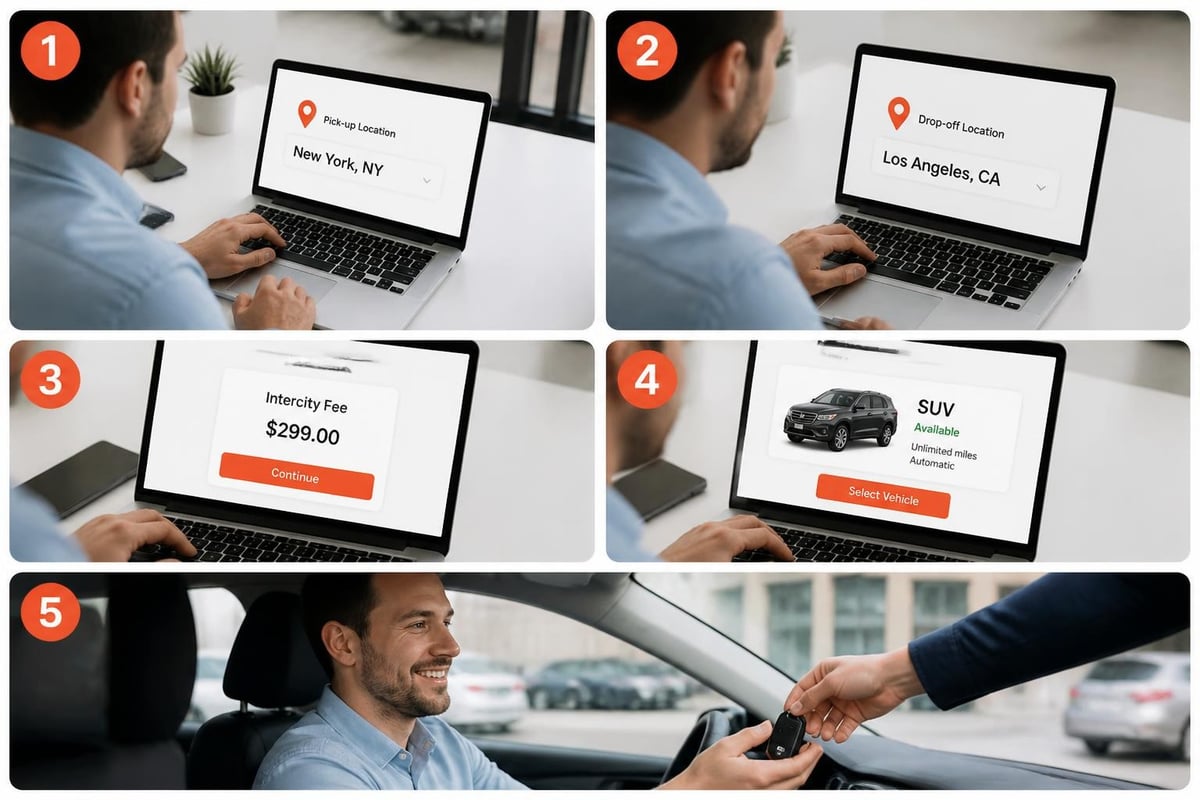
The most significant cost consideration for any hertz one way rental is the drop-off fee, also called an intercity fee. This charge compensates the rental company for the expense of repositioning the vehicle to areas with higher rental demand.
Drop-off fees can range from zero dollars on high-demand routes to several hundred dollars on less common routes. Routes where Hertz needs vehicles moved organically may have minimal or waived fees, while routes requiring active fleet repositioning carry substantial charges.
| Route Type | Typical Fee Range | Availability |
|---|---|---|
| Major airport to major airport | $0 - $150 | High |
| City to remote location | $150 - $400 | Limited |
| Cross-country routes | $200 - $500+ | Moderate |
| Same-state regional | $50 - $200 | High |
According to a detailed comparison on Rental Verdict, Hertz structures its fees based on vehicle redistribution costs, meaning popular routes where demand naturally balances tend to have lower fees. Routes requiring deadheading vehicles back to origin cities carry higher charges.
Several variables determine what you'll pay for a hertz one way rental beyond the base daily rate:
Distance and direction play crucial roles. Routes heading toward major vacation destinations during peak season may have reduced fees as rental companies need vehicles in those markets. Conversely, leaving popular tourist areas during high season often incurs premium drop-off charges.
Vehicle class selection matters significantly. Economy and compact cars generally have the most flexible one-way availability and lower fees. Luxury vehicles, SUVs, and specialty cars face more restrictions and higher drop-off charges due to inventory management challenges.
Booking timing influences both availability and pricing. A recent Hertz press release from June 2026 highlighted growing demand for one-way rentals ahead of major holidays, suggesting that early reservations secure better rates and vehicle selection.
Hertz operates globally, but one-way rental policies vary significantly by region and country. Understanding these differences helps set realistic expectations when planning international travel.
In the United States and Canada, hertz one way rental availability is relatively robust between major metropolitan areas and airports. Hertz Canada's one-way rental guide emphasizes the importance of pre-booking and confirming drop-off arrangements, noting that fees depend heavily on specific routes.
Cross-border one-way rentals between the U.S. and Canada face additional restrictions and typically carry premium fees due to customs considerations and fleet management across international boundaries.
European one-way rentals operate under different frameworks. Hertz UK's FAQ on location changes indicates that availability between branches depends on route eligibility and that fees vary based on return location and distance.
International drop-offs within Europe often incur substantial charges, particularly when crossing multiple countries. Some routes may be completely unavailable due to cross-border regulations or fleet distribution challenges.

Despite drop-off fees, a hertz one way rental can deliver excellent value in specific scenarios. Calculating the total cost of alternatives helps determine when one-way rentals are the smart choice.
Consider a road trip from Miami to New York City. A round-trip rental requires driving back to Miami, adding approximately 2,500 miles, several days of rental time, fuel costs, hotel expenses, and wear on your schedule. Even with a $300 drop-off fee, the one-way option saves time and money.
Business travel represents one of the strongest use cases. Professionals attending conferences or visiting multiple office locations can fly into one city, rent a car, conduct business across a region, and drop off near their departure airport without backtracking.
Relocation moves benefit enormously from one-way rentals. Moving from one city to another requires transporting belongings, and a one-way rental provides the flexibility to drive your route at your pace without worrying about vehicle return logistics.
Multi-destination vacations become more practical when you can explore a region linearly rather than in loops. Island destinations like Curaçao demonstrate this principle well. While you wouldn't use a hertz one way rental on a small island, the concept of exploring without backtracking applies when planning road trips that maximize your time at destinations rather than on repetitive roads.
The rental market has evolved beyond traditional models, offering solutions that address the limitations of conventional hertz one way rental options. Understanding these alternatives helps you choose the optimal transportation solution for your specific needs.
Platforms like Turo and Getaround have introduced more flexible one-way arrangements in select markets. These services sometimes offer lower fees because individual owners have different economics than large fleet operators. However, availability varies significantly by location and owner preferences.
Smaller rental companies often provide more flexible policies for local one-way rentals. While their geographic coverage is limited compared to Hertz's national network, they can offer competitive pricing for regional trips.
On island destinations such as Curaçao, local operators provide unique advantages. The compact geography eliminates one-way rental needs entirely. When you rent a Suzuki Samurai for beach hopping and island exploration, you return it to the same location, but you've experienced the freedom of open-road adventure without the complexity or fees of multi-location logistics.

Rather than accepting the first quoted drop-off fee, consider these approaches:
According to Different Drop-off's comprehensive guide, comparing one-way policies across rental companies reveals significant variation in fee structures and availability, making it worthwhile to shop around.
Even after deciding that a hertz one way rental fits your travel plans, several strategies can optimize your experience and minimize costs.
Booking well ahead of your travel dates provides multiple advantages. You lock in current pricing, access broader vehicle selection, and give yourself time to compare alternatives if fees seem excessive. The March 2026 Hertz announcement highlighting increased interest in last-minute rentals suggests that waiting until the last minute may result in limited availability and higher costs.
Hertz Gold Plus Rewards members sometimes receive fee waivers or discounts on one-way rentals as a membership benefit. While not guaranteed, loyalty status can provide negotiating leverage or automatic discounts during booking. For travelers interested in maximizing rental benefits, understanding status match programs across the industry can unlock additional perks.
Successfully executing a hertz one way rental requires more than just booking the car. Proper planning ensures your trip proceeds smoothly from pickup to drop-off.
Map your route with buffer time for unexpected delays. One-way rentals eliminate backtracking pressure, but you still need realistic time estimates. Consider weather patterns, traffic in major cities, and seasonal road conditions.
Essential planning steps include:
Keep all confirmation emails and reservation details accessible during your trip. If you need to modify your return time or location, contact Hertz customer service immediately rather than assuming flexibility at drop-off. Changes made without approval can result in additional fees or penalties.
Document the vehicle condition thoroughly at pickup with photos or video, paying special attention to existing damage. This protects you during the return inspection, especially important when dropping off at an unfamiliar location where you won't interact with the same staff who processed your pickup.
Even experienced travelers encounter challenges with one-way rentals. Awareness of common issues helps you avoid costly mistakes.
Beyond the quoted drop-off fee, watch for additional charges that can inflate costs:
Reading the complete rental agreement before driving off the lot protects you from unwelcome surprises at return. Many travelers focus only on the drop-off fee and miss other line items that significantly increase total cost.
Not all branches accept after-hours returns, which can complicate your schedule if flights or other commitments leave little timing flexibility. Some locations charge additional fees for after-hours drop-off or require you to return during staffed hours.
Verify exact drop-off procedures for your specific return location. Airport locations typically offer 24-hour returns via key drops, while neighborhood branches may have restricted hours. Understanding these details prevents situations where you're stuck with an extra rental day because you couldn't return the vehicle.
The car rental industry continues evolving, with one-way rentals becoming increasingly central to business models. Recent trends suggest growing demand and improving availability.
Data from Hertz's newsroom indicates that consumer preferences are shifting toward flexible travel options. As remote work enables longer trips and digital nomadism grows, one-way rentals support lifestyle changes that prioritize experiences over traditional vacation patterns.
Technology improvements are streamlining the one-way rental experience. Mobile apps now provide real-time pricing updates, instant confirmation of route availability, and simplified modification processes. Self-service kiosks and contactless pickup/return reduce friction points that previously complicated one-way rentals.
Dynamic pricing models are becoming more sophisticated, adjusting fees based on real-time supply and demand rather than static rate cards. This creates opportunities for savvy travelers to find bargain routes while also meaning prices can fluctuate significantly.
Deciding whether a hertz one way rental makes sense requires balancing multiple factors: cost, convenience, time savings, and travel goals. The financial calculation is only part of the equation.
For some trips, the freedom and time savings justify premium fees. For others, alternative transportation modes or traditional round-trip rentals provide better value. Your specific circumstances, including the number of travelers, luggage volume, planned stops, and schedule flexibility, all influence the optimal choice.
When evaluating any car rental decision, consider what matters most for your trip. Sometimes the most affordable option isn't the best option. If you're exploring a destination where the journey itself is part of the adventure, having your own vehicle creates opportunities that buses and trains cannot match.
This principle holds true whether you're crossing continents on a hertz one way rental or exploring Caribbean beaches by jeep. The right vehicle for the right trip transforms transportation from a necessary expense into an integral part of your travel experience. Understanding your options, comparing costs transparently, and choosing rentals that align with your travel style ensures you get maximum value from every mile.
Understanding how one-way rentals work helps you make informed decisions about when they deliver value and when alternatives make more sense. Whether you're planning a cross-country road trip or exploring a single destination intensively, the right rental approach enhances your experience while managing costs effectively. When you're ready to discover Curaçao's hidden beaches and scenic routes at your own pace, Island Vibes Rental offers distinctive Suzuki Samurai jeeps that turn every island drive into an adventure, with simple pickup and return from the same location.