
2026-08-31
Renting a car on an island transforms your vacation from a series of scheduled tours into a journey of pure freedom and discovery. Whether you're planning to explore the hidden coves of Curaçao, navigate the volcanic landscapes of Iceland, or discover the pristine beaches of Okinawa, an island rental car gives you the flexibility to set your own pace and uncover places that most tourists never see. Unlike mainland destinations where public transportation networks connect major cities, islands often require personal mobility to access their most stunning natural wonders, secluded beaches, and authentic local communities. This guide covers everything you need to know about securing and maximizing your island rental car experience in 2026.
Island destinations present unique transportation challenges that distinguish them from continental travel. Limited road networks, variable terrain conditions, and seasonal availability constraints mean that the standard approach to renting a car simply doesn't apply.
Most island economies depend heavily on tourism, which creates predictable peaks in demand for rental vehicles. During high season, the entire fleet of available cars may be reserved weeks or even months in advance. This scarcity drives prices higher and limits your vehicle options if you wait too long to book.
Terrain considerations also matter significantly more on islands. A compact sedan that works perfectly in urban Miami will struggle on unpaved coastal roads or volcanic rock formations. Many islands feature a mix of paved highways and rough secondary routes that require higher ground clearance and four-wheel-drive capabilities.

The physical isolation of island destinations creates a closed rental market. Unlike mainland locations where companies can shuttle vehicles between branches, island rental fleets are fixed. When inventory runs out, there's no neighboring city to pull from.
This limited supply has three important implications:
The UN World Tourism Organization reports on island tourism sustainability document how car rental demand creates both economic opportunity and environmental pressure on island infrastructure, particularly in destinations experiencing rapid tourism growth.
Your choice of island rental car should match both the terrain you'll encounter and the experiences you want to pursue. Standard vehicle classifications take on different meanings when applied to island driving conditions.
| Vehicle Type | Best For | Typical Daily Rate | Fuel Economy |
|---|---|---|---|
| Compact/Economy | Paved roads, town exploration | $35-$50 | 30-35 MPG |
| SUV/Crossover | Mixed terrain, family travel | $60-$90 | 22-28 MPG |
| 4WD/Jeep | Off-road beaches, mountain routes | $70-$120 | 18-24 MPG |
| Convertible | Scenic coastal drives | $80-$150 | 24-30 MPG |
The Lonely Planet guide to getting around Iceland emphasizes that four-wheel-drive vehicles aren't just luxury options on many islands but necessities for accessing certain roads legally and safely, particularly during shoulder seasons.
In Curaçao specifically, the rugged coastline and unpaved access roads to the most spectacular beaches make vehicles like the Suzuki Samurai ideal choices. These compact four-wheel-drive vehicles combine the maneuverability needed for narrow island roads with the capability to handle sandy beach approaches and rocky terrain. At just $40 per day, they offer exceptional value for travelers who want to explore beyond the paved tourist routes.

Ground clearance matters more than many travelers expect. Beach parking areas often involve driving through sand, while rural attractions may require navigating potholed or washed-out roads that would damage low-clearance vehicles.
Bigger isn't always better on island roads. Many Caribbean and Mediterranean islands feature narrow village streets designed centuries before automobiles existed. A full-size SUV that seems practical at the airport counter becomes a liability when squeezing through historic town centers or navigating hairpin mountain turns.
Consider these practical factors when sizing your vehicle:
Climate also influences the optimal choice. Convertibles and open-air vehicles enhance the experience on sunny islands with reliable weather, while closed vehicles with strong air conditioning suit tropical destinations with frequent afternoon rain showers.
The limited inventory dynamics of island rental markets reward strategic booking approaches. Understanding how these specialized markets function helps you secure better vehicles at lower prices.
Book your island rental car as soon as you've confirmed your flights. The price you pay often correlates directly with how many weeks before arrival you reserve. Major price jumps typically occur at these thresholds:
This booking timeline applies across most island destinations, from the Caribbean to the Pacific, though specific cut-off points vary by location and season. When researching renting a car in Curaçao, travelers consistently find that early booking provides both cost savings and peace of mind.
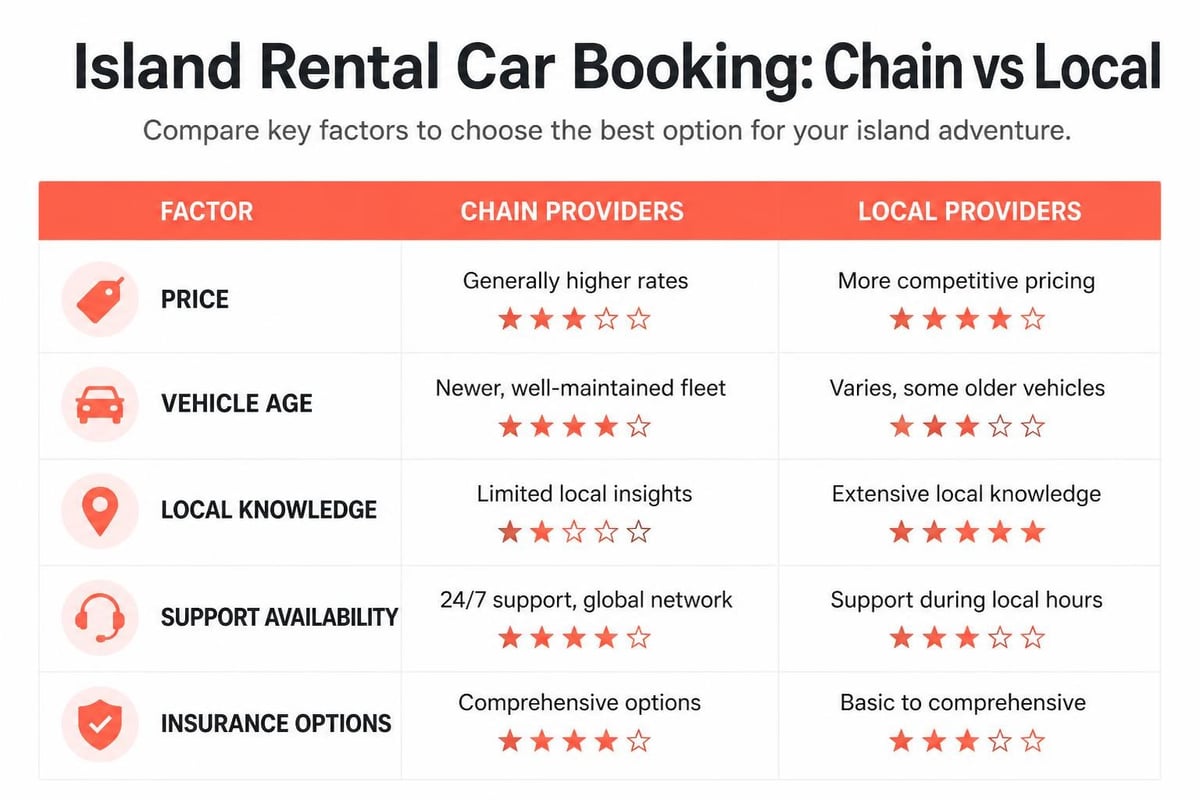
Island rental car companies fall into two categories: international chains with island branches and local independent operators. Each offers distinct advantages.
International chains provide standardized service, familiar loyalty programs, and robust insurance options. They typically maintain newer fleets and offer 24/7 roadside assistance. However, their rates on islands often include significant location premiums.
Local companies usually offer lower base rates, more personalized service, and vehicles specifically chosen for local conditions. They understand island-specific challenges and provide better advice about where to drive and what to avoid. The trade-off may be older vehicles, more limited after-hours support, and less flexibility for one-way rentals.
Insurance represents one of the most confusing and potentially expensive aspects of island rental car transactions. Counter agents often pressure travelers into coverage they may not need, while declining necessary protection can result in catastrophic out-of-pocket costs.
Consumer Reports provides detailed guidance on evaluating rental car insurance options and avoiding overpayment, particularly important given the aggressive sales tactics common at rental counters.
The four primary insurance components for an island rental car are:
Before purchasing any coverage at the counter, verify what protection you already have through credit card benefits, personal auto insurance, or travel insurance policies. Many premium credit cards provide primary CDW coverage for rentals, potentially saving $15-$30 per day.
Standard insurance policies often include exclusions particularly relevant to island driving. Read the fine print carefully for these common restrictions:
Unpaved road exclusions void coverage if you damage the vehicle while driving on non-paved surfaces, a significant concern when accessing remote beaches or hiking trailheads. Some companies specifically exclude "off-road" driving, though the definition of what constitutes an official road varies.
Water damage clauses may exclude coverage if you attempt to ford streams or drive through flooded areas, common situations during tropical rain events. Beach driving, where saltwater contact is inevitable, sometimes falls into gray areas of coverage.
Geographic restrictions on some islands prohibit driving certain rental vehicles to specific areas deemed high-risk, such as steep mountain roads or politically unstable regions.
Always ask specifically about these exclusions and document any pre-existing damage thoroughly before leaving the rental lot. Taking timestamped photos of all vehicle sides, the interior, and the odometer reading protects you from fraudulent damage claims.
International travel adds layers of documentation complexity to the rental process. Missing a single required document can prevent you from taking possession of your reserved vehicle.
The AAA guide to renting cars internationally provides authoritative guidance on license requirements, minimum age rules, and deposit procedures that vary significantly by destination.
Your home country driver's license allows you to rent and drive legally in many island destinations, but not all. Three scenarios apply:
International Driving Permits cost approximately $20 from AAA in the United States and remain valid for one year. Obtain yours before traveling, as they're nearly impossible to secure once abroad.
Island rental car companies frequently impose stricter age requirements than mainland locations. These standards reflect the challenging driving conditions and limited vehicle availability:
| Age Category | Typical Restrictions | Additional Fees |
|---|---|---|
| Under 21 | Usually prohibited entirely | N/A |
| 21-24 | Limited to economy cars only | $15-$35/day surcharge |
| 25-69 | Full access to fleet | None |
| 70+ | May require medical certification | Varies by company |
Some local operators apply these rules more flexibly than international chains. If you fall outside the standard age range, contact the rental company directly to discuss options rather than relying solely on online booking systems.
Actually navigating island roads requires different skills and awareness than mainland driving. Terrain, traffic patterns, and local customs all demand adaptation.
Several popular island destinations drive on the left side of the road, a significant adjustment for visitors from right-hand-traffic countries. The CDC's road safety travel guidance emphasizes that traffic pattern differences contribute to higher accident rates among tourists, particularly during the first days after arrival.
Islands with left-hand traffic include:
The adjustment goes beyond simply driving on the opposite side. Turn signals and windshield wipers switch positions in right-hand-drive vehicles, leading to frequent accidental wiper activation when attempting to signal. Roundabouts also flow in the opposite direction, requiring conscious attention to prevent entering against traffic.
Practice defensive driving techniques during your first few hours behind the wheel. Many experienced travelers recommend avoiding night driving initially and choosing less busy times of day for the adjustment period.
GPS navigation proves invaluable on islands where road signage may be limited or entirely in the local language. However, cellular connectivity varies dramatically between islands, affecting the reliability of smartphone-based navigation apps.
Download offline maps before arrival for destinations with spotty coverage. Google Maps, Maps.me, and other applications allow you to save entire island maps for offline use, ensuring navigation continues even without cell service.
Paper maps serve as excellent backups and provide better overall geographic context than turn-by-turn directions. Local rental companies often provide basic island maps marked with major attractions and common destinations.
Many islands feature unique road conditions worth exploring by jeep, where unmarked beach access points and secondary routes lead to spectacular but hard-to-find locations. Local knowledge from your rental provider helps identify these opportunities.
The advertised daily rate for an island rental car typically represents only a portion of your total expense. Understanding the complete cost structure prevents budget-busting surprises at pickup or return.
Three fuel policies dominate the island rental market, each with different cost implications:
Full-to-full requires you to return the vehicle with a full tank, the same level provided at pickup. This option gives you control over fuel costs by allowing you to refuel at the cheapest gas stations rather than paying the rental company's inflated rates.
Pre-purchase charges you upfront for a full tank of gas at pickup, often at above-market rates. Any fuel remaining when you return generates no refund. This option only makes sense if you're certain you'll return the vehicle nearly empty.
Fuel service charge allows you to return the vehicle at any fuel level in exchange for a substantial per-gallon fee, typically 50-100% above pump prices, plus a service charge. Avoid this option unless absolutely necessary.
Island gas prices frequently exceed mainland rates by significant margins. Hawaii regularly posts prices $1-2 per gallon above the U.S. mainland average, while remote Pacific islands may see even larger premiums due to shipping costs.
Many rental agreements restrict vehicle operation to the primary renter only. Adding authorized additional drivers costs $10-15 per day per person at most companies, though some waive fees for spouses or domestic partners.
Strategic sharing of driving responsibilities matters more on islands than short mainland trips. Fatigue from long drives on unfamiliar roads, combined with jet lag for international arrivals, makes having a second qualified driver a safety consideration beyond mere convenience.
Check whether your rental includes:

The environmental impact of tourism, including rental car usage, has become a pressing concern for island communities. The European Commission's sustainable island mobility guidelines outline how car-dependent tourism strains island infrastructure and ecosystems.
Responsible travelers can minimize their impact through conscious vehicle and route choices. Selecting fuel-efficient vehicles, combining destinations to reduce total driving distance, and respecting environmental protection zones all contribute to more sustainable island exploration.
Many islands now promote alternative transportation for certain activities. Bicycles, electric scooters, and organized shuttles work well for exploring compact historic districts or reaching popular beaches, reserving your island rental car for destinations truly requiring personal vehicles.
Choosing local rental companies over international chains keeps more of your travel spending within the island economy. Small operators typically employ local residents, maintain facilities on the island, and reinvest profits in the community rather than transferring them to corporate headquarters abroad.
Island Vibes Rental exemplifies this local business model, offering personalized service and deep knowledge of Curaçao's roads, beaches, and hidden attractions. Their character-filled Suzuki Samurai jeeps have become recognizable around the island, creating a sense of community among renters and locals alike.
Local companies also tend to offer more flexibility in booking terms, pickup/drop-off arrangements, and handling minor issues that arise during your rental period. The personal relationships built through repeated visits often result in loyalty discounts and insider recommendations unavailable from impersonal chain counters.
Islands present unique emergency scenarios that mainland travelers might not consider. Limited medical facilities, longer emergency response times, and geographic isolation mean that preparation matters more than in well-connected continental locations.
Verify your rental agreement's roadside assistance coverage before accepting the vehicle. Questions to ask include:
The Scottish rural and island mobility research documents how geographic isolation affects service delivery and response times, findings applicable across island destinations worldwide.
Store the roadside assistance number in your phone immediately upon receiving the vehicle. Cell service may be unreliable in remote areas, so also note the number on paper kept in the glove box.
Emergency contact information should include local emergency services numbers, which vary by country. The familiar 911 number works in the United States and Canada but not in most other destinations. Research and save the local equivalent before you need it.
First aid supplies aren't typically included in rental vehicles. Consider packing a basic kit with bandages, pain relievers, antiseptic, and any personal medications. Island medical facilities may be limited in rural areas, and response times can be substantial.
Secure parking matters especially in tourist-heavy island destinations where rental cars are obvious targets for theft. Never leave valuables visible in the vehicle, even in the trunk. Use hotel parking when available rather than street parking, and photograph the parking location to aid return in unfamiliar areas.
When planning a multi-day road trip itinerary, build in flexibility for weather changes, unexpected road closures, or simply discovering places worth more time than originally planned. The joy of having an island rental car comes from freedom to adapt your plans spontaneously.
Strategic planning transforms your rental vehicle from simple transportation into a gateway for authentic experiences. The Lonely Planet guide to Okinawa illustrates how car rental opens access to cultural sites, natural wonders, and local communities that package tours never reach.
Traffic patterns on tourist-dependent islands follow predictable rhythms. Rental car pickup times between 10 AM and 2 PM coincide with peak cruise ship arrivals and tour bus departures, creating congestion at popular attractions.
Early morning departures let you reach beaches and viewpoints before crowds arrive, securing prime parking and enjoying sites in peaceful solitude. Late afternoon drives capture spectacular sunset lighting while most tourists return to their resorts for dinner.
Weather patterns also influence optimal driving times. Tropical islands often experience afternoon rain showers, making mornings better for beach visits and leaving afternoons for covered attractions or relaxation at your accommodation.
Pack these items in your island rental car for maximum comfort and preparedness:
Many of the best beaches accessible by jeep lack facilities like restrooms or food vendors, making self-sufficiency essential for enjoying these pristine locations comfortably.
Traditional daily rentals aren't the only option for island mobility. Emerging models provide flexibility for different travel styles and durations.
Some island companies combine vehicle rental with guided tour experiences, offering the best of both worlds. You drive your own vehicle but follow a guide who leads the group to notable sites, provides historical context, and handles logistics like restaurant reservations or activity bookings.
For travelers seeking both independence and local expertise, guided tours in unique vehicles create memorable experiences while ensuring you don't miss important sites or cultural context. This hybrid model works particularly well for first-time island visitors who want authentic exploration without the stress of complete self-navigation.
Extended island stays often qualify for dramatic discounts compared to daily rates. Weekly rentals typically cost 15-25% less per day than daily rates, while monthly rentals may save 40-50%.
Digital nomads, seasonal residents, and long-term travelers should negotiate directly with rental companies rather than booking through aggregator websites. Many local operators offer customized long-term arrangements including vehicle swaps, maintenance coverage, and flexible start dates not available through standard booking channels.
Not every island journey requires a dedicated rental vehicle for the entire trip. Hybrid approaches combine different transportation modes to optimize both cost and experience.
Public transportation works well on developed islands with robust bus networks. Puerto Rico, Malta, and many Greek islands maintain regular service between major towns and popular beaches. Using public transit for routine travel and renting a car for specific day trips reduces total vehicle days while maintaining exploration flexibility.
Organized shuttles from hotels or tour companies efficiently handle high-traffic routes to famous attractions, freeing your rental car for destinations requiring personal transportation. Some travelers rent vehicles for only the middle portion of their trip, using shuttles during arrival and departure days when jet lag and packing limit driving anyway.
Taxi and rideshare services provide point-to-point transportation without driving responsibilities. Availability varies significantly by island, with larger or more developed destinations offering reliable options while remote or small islands may have limited service.
Securing the right island rental car requires understanding unique market dynamics, from limited inventory and terrain-specific vehicle needs to insurance complexities and booking timing strategies. Whether you're navigating volcanic landscapes, discovering hidden beaches, or exploring cultural sites beyond tour bus routes, your vehicle choice fundamentally shapes the quality and authenticity of your island experience. For travelers heading to Curaçao, Island Vibes Rental offers distinctive Suzuki Samurai jeeps and local expertise that transform a simple car rental into an adventure, helping you explore the island's rugged coastline and secluded beaches with confidence and character.